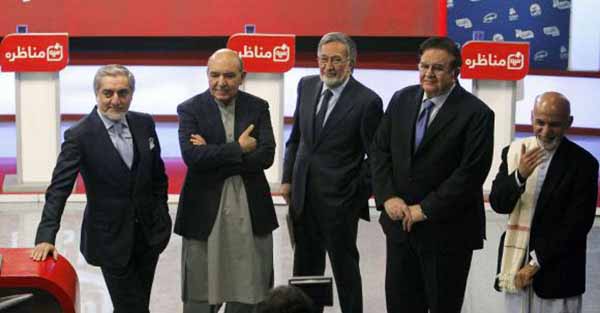
After few days delay from the scheduled time, the full primary result of the election was announced. Despite criticisms from competing sides, the level of transparency was astonishingly convenient considering the security situation and earlier assumptions about a fraudulent election. Those assumptions were generally based on enormous fraud that took place during 2009 presidential election when more than a million votes were identified as fake. Meanwhile President Karzai under pressure accepted to go for the second round with his rival Dr. Abdullah Abdullah. But Mr. Abdullah avoided going for the second round, claiming that government was involved in systematic rigging that would have left him no chance to compete against his competitor.
Shedding tears while withdrawing from competition and subsequent steadiness to challenge the hundred years old rule of Pashtun ethnic group won him support within the various communities including tribes within Pashtun community those who dissent with government of President Karzai. His steadiness and resolve as opposition won him the status of strong opposition. Believe it or not, one of the key reasons behind his remarkable success against government-backed or independent candidates was no doubt a growing sense of transfer of power to a candidate who promises change.
Since Ahmad Shah Ebdali made a strong kingdom by the name of Afghanistan, no one from other communities could challenge ancestral and inheriting rule of the community, deemed to be the biggest in Afghanistan. The rivalry has been generally between different small tribes within the community that often pushed the country to verge of utter collapse. The competition among princess was so bloody that often paved the way for interference of foreign countries and prolonging the miseries of Afghans.
I can vividly remember that people used to stare at the start of each month in Islamic calendar. When West looked reddish, then people used to make baseless assumptions about breakout of possible bloodshed and, similarly, when the moon looked tilted they were guessing about possible coup or change of the regime. But as I heard from the old people, nobody had any hope for change of power from community to another. All those power struggles were going within a community. As mentioned, the struggle for power was so fierce that left thousands of deaths and migration of people to rest of countries. Hundreds of undisrupted and unchallenged rule led to a wrong conception for fascist elements of the community. As once in BBC talk show, an analyst living in France was arguing that NATO indeed has disrupted the natural national building process! He still avoided branding Taliban militants as disruptive force that pushing the country towards destruction. He called as legal national force against intervention of foreign countries.
By natural development of national building he actually meant that foreign countries had not allowed the Pashtun community to erase smaller ethnic group from the country. In other words, he said that other ethnic groups should have been weakened to a level that could easily be absorbed by bigger ethnicity—Pashtun. So, the intervention of international community changes the power calculation. It does not allow bigger ethnic group---the Taliban---to fight other communities, killing them and weakening them to a level that should never fight the guts to stand against a Pashtun ruling. For justification of his theory, he put the history of Turkey when Turkish government massacred Aramani community. Similarly, he said that the history displays that the natural process of national building was only possible through elimination of one side. So, his prescription for Afghanistan was that international community should pull out of the country and let Taliban who are ethnically Pashtun to overrule minorities. Thereafter, the process of natural process of nation building will be completed.
Such and fascist thinking somehow sparked a sense of cordiality among minorities. A remarkable number of votes for Abdullah Abdullah came from other than his own community. As the primary result shows, the amount of votes he gained is more than the votes of Ashraff Ghani Ahmadzai and Zalmai Rasoul together. However, nobody can reject the influence of Haji Mohammad Mohaqiq, the leader of Hezb-e-Wahdat Mardam-e-Afghanistan in his success. Since deputies of no other candidates who chose their deputy from Hazara community were as influential As Haji Mohammad Mohaqiq. So, his alliance with Dr. Abdullah was the main reason behind the success of Dr. Abdullah. His influence could lead the majority votes of Hazara community towards Abdullah. The chances of Abdullah would have diminished if he selected someone else from the community and votes of community could have dispersed among various figures. The personality of Haji Mohaqiq and his deep influence among the community who is -viewed as inheritor of Abdul Ali Mazar, the former leader of Hezb-e-Wahdat Islami , could easily guide the votes of the community toward Dr. Abdullah.
Therefore, having an influential deputy and a growing support for change of power was so effective in pushing Dr. Abdullah to verge of success. Meanwhile, it should not be ignored that he maintains that Election Commissions have snatched his right otherwise he gained enough votes to become the president at the very first round. No matter, presidential election goes for the second round or not after the announcement of final result, but remarkable votes that Dr. Abdullah gained reflect a growing sense for change of traditional power calculation.