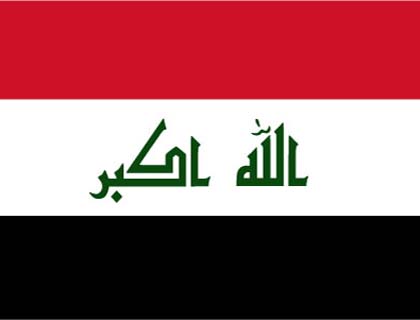
Back in 2011, when the last unit of American combatant troops was leaving from the country, it was clear that behind those joyful and cheerful faces deep down something was forcedly hidden – worry. Though Iraqis deemed American military presence as national humiliation, but the future, reeking with sectarianism and proxy competition of the neighbors, made impendence taste sore and bitter.
Many were concerned about the consequence of US military drawdown and deterioration of security situation. The Iraqi security forces still have a long way ahead to go in order to earn the confidence and trust of civilians of ensuring their protection and dealing firmly with al-Qaeda militants.
The military withdrawal from Iraq, however, was not a new policy as the Mr. Barack Obama promised during his presidential campaign to end war there and refocus on Afghanistan, which back than came out to be pregnant with more dangerous terror and extremist groups, potential of endangering the regional and global peace and security. And the withdrawal was made accurately on the prefixed schedule however against the will of his administration. Though he promised to withdraw American security forces from Iraq but wanted to maintain small number of American soldiers in order to protect achievements cost billions the country since 2003.
But the Iraqi government under the Prime Minister Nouri al-Maliki on whom Tehran exerts huge influence and opposition of both Shiite and Sunni radicals, the US was forced to leave no military in the country which paved the way for interference of neighboring countries.
The 2010 parliamentary election which was to an appropriate level and high level of turnout of all sides sparked a kind of brag for the government. The overwhelming participation of minority Sunni, who boycotted the previous 2005 parliamentary election which got the country divided sharply on the sectarian base strengthened the concept that the country was on the right direction and move forward without foreign support. The ubiquitous enthusiasm among Iraqis and their courageous participation in the voting procedure, despite several warnings issued by militants, also sparked hopes among international observers that Iraq could not be perverted once again and would move on the irreversible path of liberty and democracy. But that optimism did not last much as different political parties have been indulged in irreconcilable brawl on the power sharing. The two main players--- Ayad Allawi and Nouri al-Maliki whose parties captured the major parts of parliamentary sets---for a long period failed to reach on agreement to form government. Both parties were unable to coal with minor parities in order to complete quorum and establish the government. Similar thing might repeat in the upcoming days. However the party of al-Iraqia of Ayad Allawi once again surpassed the party of Nouri al-Maliki but the Shiite minor parties probably coal with Nouri Al-Maliki rather than Ayad Allawi.
Another conundrum in the country is the ability of Iraqi security forces. Righter after withdrawal, vice President was accused of terrorist activities and average explosions in Iraq have to worrying level. Previously, animosity existed between fundamentalists of both sides but presently the gap has grown far larger between two main sects.
The overrun of Anbar province by al-Qaeda linked militants early this year and the subsequent combats reflect that the country is not on the right truck. Transparent elections cannot do anything as far as Sunni feels marginalized. The increasing presence of Tehran on one side and the regional confrontations broke out after the Arab Spring has largely affected the country. Till now, Baghdad has openly supported the Syrian government. Seemingly, there is no curb on flow of Shiite to Syria for fighting rebels.
On the other side, with the support of many regional countries fundamentalists have made moves within Sunni dominated provinces where people are happy with central government.
Only two years ago, it looks far likely that al-Qaeda can endanger the entire democratic projects of state-building and reverse the whole process because the democratic values certainly got strong, deep roots in the urban areas, but of course, the persistence of political uncertainty and with deepening sectarian violence the condition seems so grim.
The US also has remained confused. On one hand, Washington seems does not like Nouri al-Maliki due to his close relation with Tehran. He also embarked to activities which can be interpreted that he is biased to particular community. With the support of US, Baghdad could easily overrun militants. But it is fearful that he might use the update weaponry and airpower—if provided---against minority Sunni and threaten his rivals. The parliamentary election held last month seems will not support peace and stability. The Syrian crisis and division of Iraqis on the issue along with the historic problems inside the country do not leave much hope unless Baghdad officials take some serious steps toward nation building and giving up their regional ties on account of their personal and communal interests.
Though the turnout was good and electoral process was somehow transparent, the result is not welcome as the previous election. The previously election sparked hope for a better future but the last month one was held amidst concern what will happen in the future as communal gap grows larger.