The decades of prevalent conflict and war in Afghanistan shambled everything, ranging from infrastructure to socio-political downfall, reasonless bloodshed followed by enormous people rendered physically impaired, counts to be ill consequences of those endless conflicts. Most often we see people with unpaired body part, sitting at the corner of streets haplessly asking for monetary help from every passerby. This is the disappointing picture of neglected section of society, battered by negligence of government not willing to rehabilitate them.
The saying “a child today, turns a leader tomorrow”, seems impracticable seeing the magnitude of indifference displayed by government towards the children. There are several inexplicable exploitative undertakings occurring rampantly, under the very nose of government devoid of the government’s concern. The children are being drugged, pushed for begging reflect one dimension of the heart wrecking tale and the maltreatment of children for terrorist acts depicts the other dimension. Reportedly, most of the suicide attacks are lodged by people of the age seventeen to twenty five. Some mafias are drugging children to send them for begging.
With exception to handicapped people, children and women are also dragged to begging as witnessed on the street of urbanized cities. Reportedly, some clandestine gangs are renting children of penniless families; drug them with opium to further their malicious design. The wide indifference of government facilitates, begging turned into one of the illegal trade in our war-torn country.
The rhetoric of government might not alter the deteriorated state of affairs, but practical initiatives might discourage the trend if couldn’t reverse it. Formerly, President Hamid Karzai denounced drug addiction among children as a contravention of Islamic teachings and basic human rights, calling for an end to the scourge. Mr. President, there are several socioeconomic reasons coercing children towards addiction; extreme poverty is one of the underlying factors. Unless, government take a firm stand and devise plans to curb poverty and illiteracy the children endlessly will be used as a fuel in the ongoing bloody conflict.
The government fallaciously deems putting restrictions, might win a congenial solution to this emerging problem. In this pursuit, street-begging was outlawed in November 2008 by the government and a commission formed was made up of different government bodies and the Afghan Red Crescent Society (ARCS) - to end street-begging in the capital.
Nevertheless, it did not help, instead the numbers seem to have grown in the last few years. The Afghanistan Human Rights Independent Commission (AHRIC) estimates there are 60,000 child addicts in the country. Opium is the most common drug sown and used in the street of the country unchecked. The addict children are used a tool to earn money for respective gangs. This is an alarming figure narrating the grave human rights violation where children subjected to ill-treatment very close to concerned departments.
Afghanistan suffers many problems, poverty being one of the greatest. The United Nations Development Program (UNDP) calculates nearly half of Afghanistan's estimated 30 million people live on less than 1 USD a day. Poverty might serve one of the reasons pushing great majorities of young population towards illegal means of earning. Many concerned public officials lack, the requisite data pertaining the underlined figure, depicts the degree of interest of government toward this issue. Viewing the worsening state of affairs, one finds the lack of interest concerning welfare of masses serves the greatest reason for the ongoing notorious condition. Some of public official hesitant to take action against may be allegedly involved in the trade.
The widespread misappropriation, embezzlement and corruption seem to be another problem lagging the government concentrate on this very issue. Some of the concerning organization and the department like the Afghan Red Crescent Society, which was part of the anti-begging commission, established in 2009, has been hamstrung by a funding crisis, acknowledged by another reputable organization of AIHRC. The government must come forth devising strategies to fight out this very menace; infiltrating in the society at present before it reaches to the point of no return.
The latest United Nations (UN) report reveals that the Afghan conflict claimed lives of at least 545 children and injured a total of 1,149 others last year. The United Nations Assistance Mission in Afghanistan (Unama) launched a booklet highlighting the complementary between the teachings of Islam with international human rights and international humanitarian law.
Improvised explosive devices (IEDs), which are the biggest killers of civilians in Afghanistan, were the leading cause of death in children. “The conflict has exposed children to armed groups that prey on their vulnerability and exploit them, and who use children to participate in active hostilities or as messengers and delivery boys – further exposing children to the dangers of war,” said the Secretary-General’s Special Representative for Afghanistan and head of Unama, Ján Kubiš, at the launch, revealed Unama’s website.
The conflict also often denied children basic human rights such as access to education and adequate health care, and has impeded even the most basic economic development, fuelling poverty and further vulnerability of children.
The report focused on the six grave violations of child rights in armed conflict, namely: the killing and maiming of children; recruitment, use and association of children with armed forces and armed groups; the abduction of children; attacks against schools and hospitals; rape and other forms of sexual violence against children; and the denial of access to humanitarian assistance.
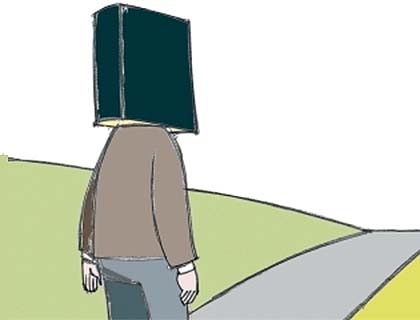
These youths, if educated in a better way and provided with opportunities they require, can play a very effective role in the development of our country. They are potent, energetic, zealous but perplexed, disappointed and unmotivated. They suffer emotional degeneration seeing the countless magnitude of apparent irresolvable problems. Young people in any country represent the future of that country. They have a vital role to play in the development of the country, a duty they must perform, given they are provided standard education and conducive learning atmosphere –the educational institutes designed to translate societal needs into mandatory achievable goals.
Studies from countries affected by conflict have shown that large youth population combined with poverty and inequality conserve as a fertile ground for radicalization of youth and the spread of extremism. Militancy, insurgency and radicalization are negatively affecting our youth, they can only be reversed when rational policies are framed and decoded, enforced and implemented with its full spirit.