
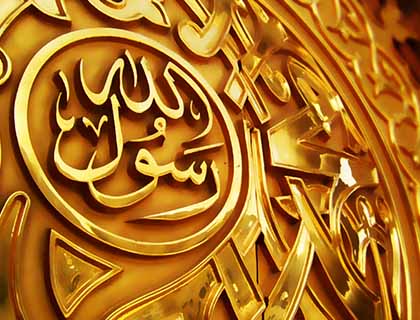
Based on Islamic beliefs, Prophet Muhammad (PBUH) was the last messenger of Allah and divine revelation was finalized with his demise. Moreover, it is believed that all the divine messages are revolving around a central target which is a set of moralities. Jesus Christ, Moses, David, Jacob, etc are highly venerated by Muslims for being the righteous messengers of God whose names are mentioned in Holy Quran with due respect. The said messengers conveyed the messages of Allah truly and explicitly. Each and every Prophet was sent to revive and inject new soul in the holy messages of God to make them more appropriate for their age, however, the kernel of the messages was one and unchangeable. Eventually, Prophet Muhammad (PBUH) emerged to complete the chain of divine messages within 23 years of his prophecy. The finality was due to the rich messages conveyed by the last Prophet and maturity of the people and must not be construed as needlessness of religion.
In Islam, however, a prophet or a messenger expresses the will of God for a nation or all humankind. The message delivered by him is binding on those to whom it is sent and a rejection of him is a rejection of God. The work of a messenger, furthermore, change earlier religious laws and create a new religious community. The belief that the Prophet Muhammad (PBUH) is the last prophet and messenger of God means that after him there will not arise any person who will be authorized by God to express his will for others in a binding way and/or institute a new religious community around that expression. Any person claiming to have such authority is suffering from self-deception and/or is lying; no matter how smart he may be or how many miraculous deeds he may perform.
Although, the claim of prophetic finality will be a post hoc explanation, the fact is that we are supposed to accept that the chain of the Prophecy is not the point of no return and has to stop at a point. This claim is more analytical than empirical and many ideas are expressed in this regard.
According to Allama Iqbal Lahori, and Islamic thinker and philosopher, looking at the matter from this of view, the Prophet of Islam seems to stand between the ancient and the modern world. In so far as the source of is revelation is concerned he belongs to the ancient world; in so far as the spirit of his revelation is concerned he belongs to the modern world. He hopes that the birth of Islam be able presently to prove to your satisfaction, is the birth of inductive intellect. In Islam prophecy reaches its perfection in discovering the need of its own abolition. This involves the keen perception that life cannot for ever be kept in leading strings; that, in order to achieve full self-consciousness, man must finally be thrown back on his own resources. He believes that the abolition of priesthood and hereditary kingship is Islam, the constant appeal to reason and experience in the Holy Quran, and the emphasis that it lays on Nature and History as sources of human knowledge, are all different aspects of the same idea of finality. The idea, however, does not mean that mystic experience, which qualitatively does not differ from the experience of the prophet, has now ceased to exist as a vital fact.
Iqbal further believes that the Quran regard both Anfus (self) and Afaq (world) as sources of knowledge. God reveals His signs in inner as well as outer experience, and it is the duty of man to judge the knowledge-yielding capacity of all aspects of experience. The idea of finality, therefore, should not be taken to suggest that the ultimate fate of life is complete displacement of emotion by reason. Such a thing is neither possible nor desirable. The intellectual value of the idea is that it tends to create an independent critical attitude towards mystic experience by generating the belief that all personal authority, claiming a supernatural origin, has come to an end in the history of man. This kind of belief is a psychological force which inhibits the growth of such authority. The function of the idea is to open up fresh vistas of knowledge in the domain of man’s inner experience.
Holy Quran says: “Muhammad is not the father of any man among you, but he is the Messenger of Allah and the Seal of the Prophets [with him Allah has sealed the advent of prophets, such as there is no prophet after him] and Allah is aware of all things.” (33: 40)
One of the reasons behind the finality is that people can carry the mission of guiding their fellows. As it is said in Holy Quran: “And among those whom We had created are a people who guide others with truth and in accordance therewith act justly. But as for those who treat Our signs as lies, We gradually bring them down by means of which they know not; and though I lengthen their days, verily, My stratagem is effectual.” (7: 181- 183)
So, Prophet Muhammad (PBUH) is the one missing brick and he completes the house of prophethood so that no empty niche is left there to provide room for another prophet.
Therefore, Prophet Muhammad (PBUH) came with a complete, universal and faithfully preserved revelation from God which has reached or can reach all nations; there remained no need for a new prophet. Through his well-preserved revelatory words and deeds the spirit of prophecy has achieved a permanent and universal presence in the world and hence the need for a new prophet has been removed forever.