
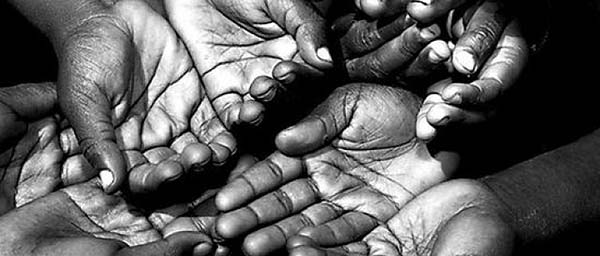
The decades of prevalent conflict and war in Afghanistan shambled everything, ranging from infrastructural to socio-political downfall, reasonless bloodshed followed by enormous people rendered physically impaired, counts to be ill consequences of those endless conflicts. Most often we see people with impaired body parts, sitting at the corner of streets haplessly asking for financial help from every passerby. This is the disappointing picture of neglected section of society, battered by negligence of government not willing to rehabilitate them.
The former four decades of war have earned nothing except countless miseries and devastation that is going to ensue, talks with assassins of Afghans. The year’s long war destroyed economic infrastructures completely and dragged Afghanistan towards annulment. No significant progress has been made, albeit there have been international efforts to make Afghanistan's economy stand on its own feet, improve the living standard of people and create more job opportunities provided that the menace of corruption constantly depleted the rate of progress.
The masses are constantly asking for economic relaxation, end to unemployment, better living facilities, peace, security and human rights protection who are turned a deaf ear to, instead, are responded with vague declaratives like, concrete measure are undertaken to bring eminent changes, committees are formed to assess the causes of terrorism and corruption, people will be given economic incentives, the country will be making a prosperous in the region. Irrespective of the aforementioned promises, not a single plan is put into action that could materialize within the desired course of time. The promise made volatile enough capable of easy evaporation.
The ruling class keeps on building castles in the air by making impracticable pledges. The masses are asked to wait and hope for the betterment and are instructed to earn faith in supreme creature deciding something good in their fate, at the end of day. We have been practically changed into a nation who is to just wait and hope for the best. The government and ruling elites relies on making promises, as if their hollow and fuzzy assurances could solace the relentless issues related with unemployment and poverty. The masses are fed up with the formless promises. The high degrees of disappointment are reflected from their sun burnt faces which are the timely manifestation to the underlying facts. It is an uncompromising reality that the escalating graph of poverty made it difficult for an ordinary person to make the ends meet.
Consequently, anybody striving selflessly to earn his livelihood with great earnestness does owe an undying virtue. However, the public departments and institutions are devoid of such pieties and are bursting with corruption, monopoly and nepotism and favoritism. Any public official enjoying a notable position competes his counterpart in drawing the greater benefits out of public assets. In the public offices an ordinary person has to wait and suffer until the officials is not paid a sufficient amount of the bribe. You are not regarded amongst dignitaries unless you divert greater public resources and accounts into your personal use and subsequently claim them your birth possessions shamelessly at the end of the day.
Poverty and unemployment are identified as the driving forces behind insecurity, and called for these issues to be addressed as a priority. Some people participate in insurgent activities to acquire an income. Joining anti-government elements or undertaking other illegal activities, such as drug production and trafficking, is often more lucrative, and with immediate returns, than struggling with farming or working in the informal sector for low wages. The practical dilemma in implementing the new strategy is that food and agriculture problems cannot be separated from problems caused by conflict, corruption, and narcotics trafficking.
According to a report published by the Office of the High Commissioner for Human Rights (OHCHR), some 9 million Afghans – 36 per cent of the population – are believed to live in absolute poverty and a further 37 per cent live only slightly above the poverty line, despite an estimated injection of billions of dollars in previous years. Afghanistan has the second highest maternal mortality rate in the world and the third highest rate of child mortality. Only 23 per cent of the population has access to safe drinking water, and only 24 per cent of Afghans above the age of 15 can read and write, with much lower literacy rates among women and nomadic populations
Formerly, the World Bank Group (WBG) chief, Jim Yong Kim, met with President Hamid Karzai and other senior officials, committed to helping the Afghans to promote growth and reduce poverty during and after the withdrawal of western security forces in 2014. He said they would support programs in areas that the Afghan government had identified as crucial to meeting its development goals, including education, health, irrigation, energy, infrastructure and rural development.
"We are also focused on improving the government’s capacity to deliver services to its citizens, and on fostering a business climate that unleashes the job-creating potential of the private sector,” Kim said. His discussions with Afghan leaders focused on the need to engender strong, inclusive economic growth, reduce poverty, create jobs and fight corruption. Kim also emphasized that prudent fiscal policy and budget planning will help the government sustainable finance its development operations.
The national and international financiers and donors are willing to extend their services, businesses and aids, provided the government ensures a corruption free and a transparent systems operating efficiently. The confidence installed in them, only then the government can attract the international investors –if safeguards to maltreatments are rendered. Following a transparent undertaking in governmental business, the financiers, donors and investors may actively contribute to poverty alleviation by creating job opportunities. The government is consequently held responsible to take poverty alleviating measures on a war footing by making the use of all possible steps. But, the query, whether the property can be alleviated, awaits to be entertained.