
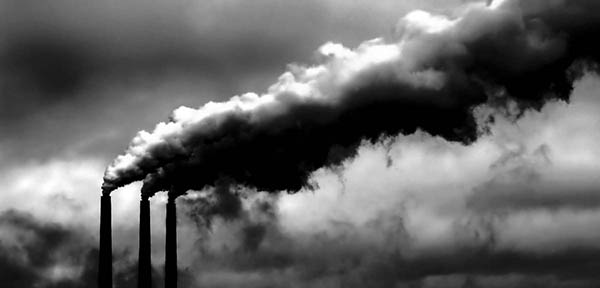
The changes in climate will affect everyone in one way or another. For example, countries whose coastal regions have a large population, such as Egypt and China, may see whole populations move inland to avoid flood risk areas. The effect on people will depend on how well we can adapt to the changes and how much we can do to reduce climate change in the world.
Have you ever been inside a greenhouse on a cold winter day? It might be cold outside, but inside the greenhouse lush green plants flourish in the warmth and sunshine. Greenhouses are made of glass and are designed to hold heat inside. Our planet's atmosphere traps energy just like a greenhouse. Energy from the sun can enter the earth’s atmosphere, but not all of it can easily find its way out again.
What blocks the sun’s energy from escaping from the earth? Unlike a greenhouse, the earth does not have a layer of glass over it. Instead, molecules in our atmosphere called greenhouse gases absorb the heat. Greenhouse gases include water vapor, methane, ozone, nitrous oxide and carbon dioxide. There may not be much of some of these gases in our atmosphere, but they can have a big impact. Each greenhouse gas molecule is made of three or more atoms that are bonded loosely together. These molecules are able to absorb heat, which makes them vibrate. They eventually release the heat energy and it is often absorbed by another greenhouse gas molecule. Since there are more and more greenhouse gases in the atmosphere, more heat is trapped which makes the earth warmer. This is known as global warming.
When the weather gets warmer, evaporation from both land and sea increases. This can cause drought in areas of the world where the increased evaporation is not compensated for by more precipitation.
In some regions of the world this will result in crop failure and famine especially in areas where temperatures are already high. The extra water vapor in the atmosphere will fall again as extra rain, which can cause flooding in other places in the world.
Strengthening of the greenhouse effect through human activities is known as the enhanced greenhouse effect. This increase in radioactive forcing from human activity is attributable mainly to increased atmospheric carbon dioxide levels. Based on an Assessment Report from the Intergovernmental Panel on Climate Change (IPCC), “most of the observed increase in globally averaged temperatures since the mid-20th century is very likely due to the observed increase in anthropogenic greenhouse gas concentrations.”
In its Fourth Assessment Report (AP4) of IPCC, a group of 1,300 independent scientific experts from countries all over the world under the auspices of the United Nations concluded there’s a more than 90 percent probability that human activities over the past 250 years have warmed our planet.
The industrial activities that our modern civilization depends upon have raised atmospheric carbon dioxide levels from 280 parts per million to 379 parts per million in the last 150 years. The panel also concluded there’s a better than 90 percent probability that human-produced greenhouse gases such as carbon dioxide, methane and nitrous oxide have caused much of the observed increase in earth’s temperatures over the past 50 years.
Most climate scientists agree that man’s activities are making the natural greenhouse effect stronger. If we carry on polluting the atmosphere with greenhouse gases, it will have very perilous effects on the earth.
Some greenhouse gases, like methane, are produced through agricultural practices including livestock manure management. Others, like carbon dioxide, largely result from natural processes like respiration and from the burning of fossil fuels like coal, oil and gas.
Since the beginning of the Industrial Revolution in the early 1800s, humans have been burning fossils fuels at an ever-increasing rate.
According to NASA, about 30 percent of the radiation striking the earth is reflected back out to space by clouds, ice and other reflective surfaces. The remaining 70 percent is absorbed by the oceans, the land and the atmosphere.
Of the sunlight that falls on the earth’s surface, approximately 40% of that energy is reradiated upward into the atmosphere in the form of long-wave radiation. Approximately 75% of that upward radiated long-wave energy is absorbed by water vapor, carbon dioxide, methane and other greenhouse gases. Since this absorption process is molecular in nature, the subsequent re-radiation of energy by these gases is multidirectional. As a result, about 50% of the long-wave emission is reradiated back toward the earth where it is once again turned into heat energy. Through this process, greenhouse gases contribute to the amount of heat energy released at the earth’s surface and in the lower atmosphere.
World carbon dioxide emissions are expected to increase by 1.9 percent annually between 2001 and 2025 (Figure 5). Much of the increase in these emissions is expected to occur in the developing world where emerging economies, such as China and India, fuel economic development with fossil energy. Developing countries’ emissions are expected to grow above the world average at 2.7 percent annually between 2001 and 2025; and surpass emissions of industrialized countries near 2018.
It merits mentioning that the greenhouse effect is also useful because trapping some energy keeps the temperatures on our planet mild and suitable for living things. Without its atmosphere and the greenhouse effect, the average temperature at the surface of the Earth would be zero degrees Fahrenheit. However, too many greenhouse gases can cause the temperature to increase out of control. Such is the case on Venus where greenhouse gases are abundant and the average temperature at the surface is more than 855 degrees Fahrenheit. However, the advantages are too low to be compared with the disadvantages.
If these trends continue, scientists, government officials and a growing number of citizens fear that the worst effects of global warming — extreme weather, rising sea levels, plant and animal extinctions, ocean acidification, major shifts in climate and unprecedented social upheaval — will be inevitable.