Since the fall of the Taliban in 2001, and with the presence of international community, politics in Afghanistan has steered off its historical trajectory that had been involved with bloodshed, target assassination, blinding, and scandalous atrocities for 250 plus years as suggests a quick review of its history since Ahmad Shah Durrani’s foundation of it in 1747. Although under very few of the kings and premiers some tendency for change is traceable, in almost-three-hundred years of its history, however, these movements have not been successful; therefore accounts of atrocity fill almost all pages of history of this territory. Now that the traditional ethnic-based reigning is on the path of destined decline, the two candidates contending for the runoff have challenging times ahead: any of the two who will be the next president will have to continue Karzai’s departure from ethnocentrism. Legitimacy still is strongly reliant on tribal/ethnical factors as well as religious ones – from both of which, the two contenders have been targeted. With each coming from ethnic backgrounds that have been involved in politics, their role becomes even more accentuated in the last scene of tribal/ethnical power play and gaining enough legitimacy, at least verbal support by major tribes, widely enough to keep them in presidential palace, becomes even harder.
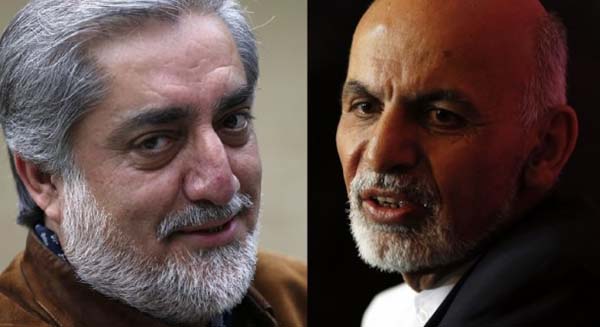
Ashraf Ghani comes from Ghilzayi clan of Pashtuns – Pashtuns are blamed for weak performance in statesmanship, atrocities, and oppressions. Since Ahmad Shah Duranni, an undisputed right to be the king – first person reigning over the territory – is defined to be of inherent rights of Pashtuns; among them, this right had been reserved for Ahmad Shah’s lineage of Durannis for around a century and then for Barikzayis, tough rival of Ahmad Shah’s lineage that finally overthrew them in 1826. Since then, the right to rule the country had been deemed to be of Barikzayis until king Zahir Shah. Ghani’s non-Durrani clan, however, has not been in power except for Noor Mohammad Taraki and Dr. Najibullah Ahmed Zai both from PDPA. One challenge, however, is that the notion still exists that the presidency is inherent for Durannis and Barikzayis – Kandahar Jirga is one reason to evidence this claim. That is not it. He is a technocrat who, arguably, is the second global thinker with ten years of experience in World Bank, for which he is expected to be a wise and tolerant president – he sometimes does not prove to be so. To look at him from another perspective, he is coming from Kuchi clan – nomads of Afghanistan – who has not been on good terms with Hazaras since Abd-ur Rahman’s decree entitling them the right to graze their herds on pastures of Hazarajat. Kuchis’ using of these pastures has been involved with bloodshed, atrocities and calamities, most recent of which is Behsud’s case since 2010 that has claimed lives and left thousands of Hazaras displaced. If the next president, Ashraf Ghani should find a fair resolution for this case that his team addresses as a legal dispute between Hazaras and Kuchis.
Abdullah Abdullah, Ghani’s rival who surpassed him in first round of elections, is a Tajik. Tajiks have been in power for twice, none of which so graceful ruling however. Habibullah Kalakani, first Tajik on Afghan throne, backed by influential Naqshbandi Mullahs, overthrew Amanullah Khan on 18th of January 1929. Unfamiliar with any ethics and principles of ruling, he undid all western-like reforms by Amanullah, the Nizamnama (first constitution of Afghanistan), and the taxes. Soon economy collapsed, insecurity emerged, and people gave hand to Nadir Shah, former warfare minister in Amanullah’s cabinet, to overthrow him. He was hanged by Nadir Shah having ruled only for only nine months. Borhan ud-Din Rabbani, a graduate of al-Azhar University of Egypt and a popular Mujahidin spearhead, was the second Tajik who was chosen as successor of Mojaddai for four months by Islamabad Conference of Afghan Mujahidin in Pakistan, and subsequently by Shuray-e Hall-u Aqd that was convened by himself in Herat city. Under his rule, economy collapsed and the country went through fiscal crisis – 10,000 Afghani bank notes, for instance, were printed –; many calamities happened and Taliban conquered Kabul – he kept ruling as president of Afghanistan in one northeastern province, Badakhshan, his birthplace. Abdullah was spokesperson for the Ministry of Foreign Affairs then.
Although neither of the candidates is responsible for all what have been done by others in the history, any of the two who will be the next president, will be definitely role-playing in the last scene of a history as familiarized above. They still face serious challenges threatening their legitimacy and need a wide verbal support that serves as a guarantor for them to seize power. At the same time, they will prove if rationality in political sphere has gotten to be mature and whether perspective of the politicians have grown sturdier than to be bound to one specific ethnicity – or in other words, if they can think beyond the ethnicity they belong to.