Afghanistan is due to pass through its first historic democratic transition that serves to be decisive in the history of the war torn country. The future prospect of the state can certainly be determined from the acceptability of the election’s result, that reportedly conducted without undue means and the role of elected political leaders to devise a solution to the multifarious problems of the country.
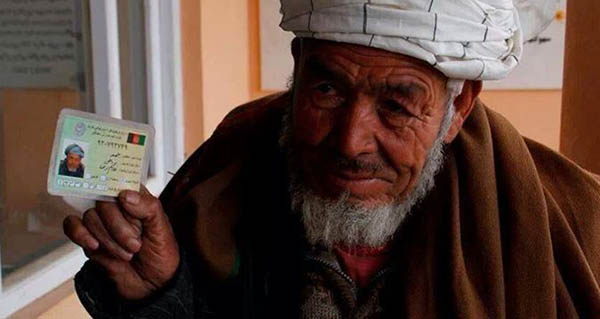
Despite booming security threats, a throng of people was observed gathering aligned in rows to the nearest polling stations across the length and breadth of war torn Afghanistan in a bid to try altering their disgruntled fate. This was a tremendous exercise of democratic right of the people, enshrined in the constitution. The zeal and enthusiasm displayed by voters’ intimates the degree of confidence they associated with democracy, that is likely to carry forth a paradigm shift in their livelihood. The enthusiasm, warmth and civic participation reflected as if every person was going for presidential runoff. Nonetheless, another aspect of electoral undertakings, worth mentioning, is countless patience displayed by voters exercising their right to franchise.
The unexpected large voter turnout in the runoff depicts people of Afghanistan are fed up of violence and despotic regimes instead are seeking to turn their mother land into a piece of land where the right of life, privacy and civil liberties are safeguarded. It too reflected Afghanis are fervent to lead a elegant life; they used the power ballot to let the world know they are against bullet and insurgency. Hundreds of people waited in long lines in front of voting centers in various provinces worth seeing.
This time election commission’s preparedness was comparatively better, still lapses were underscored in the form of shortages and timely distribution of ballot papers. The sources of the Independent Election Commission (IEC) and Electoral Complaints Commission (ECC) spoke of lesser irregularities during the second round, citing the fewer number of formal complaints they had received on Election Day. The sources of the Independent Electoral Complaints Commission (IECC) unearthed 29 objections had been filed against its staffers and 275 general complaints, including 140 telephonic, complaints had been registered by the end of the voting process. These complaints must be addressed fairly devoid of socio-political standing of a person into account.
Despite the underlined administrative flaws and security concerns, the conduction of comparatively fairer and successful election that drew a degree of appreciation from international community, renders to be the greatest achievement of the government provided if it follows a peaceful transition of power. However, both the presidential contenders cried foul play put into practice to exploit the election’s result given each of the claim having earned the highest votes, seems premature unless fair vote counting is finalized. For a common Afghan it might not matter who succeeds Karzai but his policies and priorities do. Nontheless, their right to self determination must be valued and respected.
At the moment Afghanistan is convening economical declination, social degeneration and political chaos. The outgoing President is leaving behind the legacy of male-administration, political ill-priorities, disproportional balance and battered relation with the world and neighboring countries. The political and socioeconomic problems barring Afghanistan’s collective progress, could be gotten rid of, given the charisma of the forthcoming elected political leader works.
Election letting people exercise their free will electing their representatives is the founding pillar of democracy. Democracy is a universally accredited governing system drawing handsome reliance from intellectuals across the world. The rational laws incorporated in the constitution assuring independent functioning of intuitions are the strengthening elements of democracy; provided the pragmatic course is pursued. Hence, universal suffrage in a democracy isn’t limited, to change of faces, but the change of policies and priorities. Most of Afghanis think policies matter and faces.
The incoming president made huge claims of averting the ill fate of the masses. Some contestants rely to mere extension of assurances of well-being, security and welfare to their voters if elected. Others talks of substituting the democracy with caliphate or presidential with parliamentary.
Some religious political parties’ propagated revival of Islam and preservation of religious dogmas installment of religiously motivated teachings render their primary motives, couldn’t earn enough votes and were turned down in the first round, intimates Afghans don’t favor politics based on religion. It is an established truth, politics exercised on religious ground is quiet malicious and devastative and is a conspiracy to destabilize afghan society. It is better politics should be practiced on the grounds of civic welfare, given that the use of religious sentiments and religious polarization of society will never serve afghans’ interest.
Apparently any such claims sounds stunning, but impracticable, seeing the ground realities; there are manifold sects in Islam which derives variant inspiration from Islamic history. They identically, offer different interpretations for the same historic event. For such a daydream to crystallize, a broad based and agreed consensus is needed, which can only be achieved, taking every sect into confidence. Moreover, the government of Taliban claimed to be the guarantor of Islamic Jurisprudence, worth seeing that witnessed extensive human rights violation. It is democracy that earned universally recognition protecting human rights.
Having been blessed by a pragmatic leadership both the quantity and size of problems intervening the rate of progress, subsides. Determined executive, vigilant legislature, justice serving judiciary and compliant media are organs of central importance to a vibrant state. It should be learned that quantity of material possession decides not the rate and span of collective triumph but the number of well learned and cognizant men do. Greater the number of eligible citizens, greater will optimistically contributing individuals to play their part in upbringing of the country out of multifaceted crisis. This only crystallizes, given the supremacy of rational laws and merits are withheld.
The presidential contenders’ assurances of betterment will work only when tangible measures are taken subsequent to joining his office. Afghanistan cannot develop without a sustainable economical and socio-political road map drawn and implemented that could grant them economic and political independence. The state of self reliance can only be achieved when heavy investments are made in the field of human resource developmental programs.