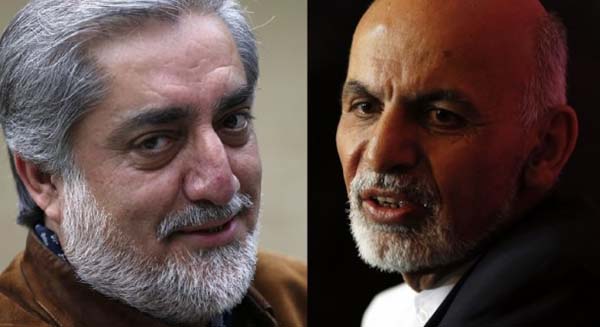
While only few days remain from the announcement of partial election result, the stance of both presidential candidates for the second round seem worrisome. Both teams emphasize that they do not want to be opportunistic by any cost but their behaviors reflect something else. Dr. Abdullah who from the very first day of the election said that he had no rival other than fraud now proves his position by putting demands which would only stretch the already strained political situation.
Obviously, Afghanistan is one of the countries which are still not familiar with basics of democracy. Even before the election, all people were worried about the extent of vote riggings. Despite that the turnout of people in the first round of Presidential election as well as in the second round were visibly high that sparked appreciation of world leaders. During the election campaign, TV channels interviewing civilians reflected that the participation of civilians would be high. And after the first round of the election, many interpreted the high turnout as trust of Afghan people on election commissions and level of transparency practiced.
Now after the second round, many have come and put the opposite theory saying that election commissions have ruined the trust of people shaped after 2009 Presidential election.
Indisputably, the April 5th presidential election had some essential differences with two other elections. In both 2004 and 2009 elections, President Hamid Karzai was deemed as invincible runner of the elections. In both elections, the number of candidates was so large that anybody who had financial supporter registered their names while understanding that had no chance to win the election. They came forward only for popularity and assumed strengthening of communal status through the election.
In other words, in 2005 Presidential election, wining was not the main objective of the candidate but the percentage of votes gained by each candidate who represented a particular community was informal population of the community. Though no one can depend on such percentage because the fraud was so high and voting boxes were filled by government. Anyhow, in both election people believed that Mr. President Hamid Karzai would finally become the president whether through fraud of pure votes of civilians because the international community had other option other than him to work with. Thus, the international community, particularly, the Washington officials are in consensus to keep him as President.
But 5th April President Election this year did not have any of such characteristics. The relation between Kabul and Washington hit to all time low. Mr. President Karzai instead of developing a better relation with the US for whose sake he came to power, he resumed inflexible stance almost on any issue.
That environment increasingly strengthened the notion that White House has decided to distance itself from President Karzai and instead work on an alternative that holds a much appropriate view toward Washington.
Additionally, as per constitution President Karzai was banned to run the election. So unlike previous two elections, the suspicion that government might get engaged in a systematic electoral fraud in the favor of this or that candidate is diminished. However, time and again murmuring popped among people that finally Mr. President would pick up from among candidates. In the first round, despite claims of riggings, the international community as well as domestic institutions all together expressed their satisfaction over level of transparency observed. However, in the first round Dr. Abdullah claimed that he won 50+1 percent of total votes which would have made him qualified to replace President Karzai. But ultimately when the election commissions announced that he got only around 45 percent of votes, he accepted.
Considering the percentage of votes he gained and also alliances he made with other presidential candidates strengthened the concept that he would be the ultimate winner. But some deep communal differences were ignored irrespective of level of frauds. Part of his alliances gained him nothing but distance from other communities. No doubt, the votes he gained from eastern provinces were ignorable even at the first round. Major parts of his votes come from Hazarajat, that also due to Haji Mohammad Mohaqeq, one of the most influential figures among Hazara community. But his efforts to get larger votes from different community proved against him and this phenomenon once again proved the tight tribal culture.
As a friend from Wardak province told that the level of participation of people in the second was not comparable to the first round. He claimed that at 10:00 AM even Taliban militants announced through loudspeaker to vote; the claim which does not look so unexpected. Dr. Abdullah was a close colleague of Ahmad Shah Masoud, a potential opposition force to Taliban militants. For years he fought against Taliban and also popular for severe remarks against Taliban during past years.
Thus, it is highly possible that Taliban feared if he wins the election and becomes the next president, he might behave with them as President Karzai did. He might call them as dissent brothers rather with the support of international community would launch tough battle against them in the eastern parts of the country. Same is not true for Dr. Ashraffi Ghani however he has openly criticized Taliban. Perhaps, the communal bondage outweighs other relations. As Taliban militants never behaved warlords of Pashtun ethnicity as the warlords of the other communities.