
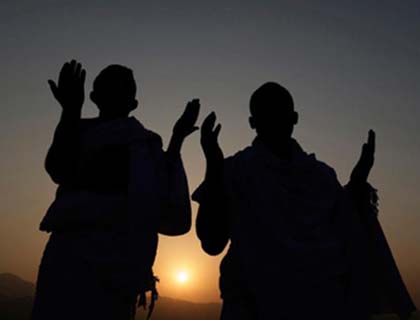
After a long and hectic day at work, how difficult it is for a tired person to go out to the mosque and concentrate on his prayers to Allah, the Almighty. Snuggled up in a warm and cozy bed, how difficult it is to get up at the sound of azaan (call to prayer): “Come to prayer! Come to success!”
The famous doctor and philosopher, Ibn Sina (Avicenna), recalls such a moment in his life. One cold and icy night, he and his slave were resting at an inn in a remote part of Khuraasaan. During the night, he felt thirsty, so he called to his slave to bring him some water. The slave had no desire to leave his warm bed, so he pretended not to hear Ibn Sina’s call. But finally, after repeated calls, he reluctantly got up and went to fetch the water. A little while later, the melodious sound of the azaan filled the air. Ibn Sina began to think about the person calling the people to prayer. “My slave, Abdullah, he mused, has always respected me and admired me. He seizes any opportunity to lavish praise and affection on me, but tonight he preferred his own comfort to my needs. On the other hand, look at this Persian slave of Allah: He left his warm bed to go out into the chilly night, he made ablution in the icy water of the stream, and then he ascended the high minaret of the mosque to glorify Him Whom he truly serves.” He adds “I bear witness that there is none worthy of worship except Allah. I bear witness that Muhammad is the Messenger of Allah.” Ibn Sina records: “I learned the essence of true love, that love which results in complete obedience.” The love of Allah demands total and unconditional obedience. Allah, the Almighty says: “Say [oh, Muhammad!]: If you love Allah, follow me: Allah will forgive you your sins, for Allah is oft-forgiving, most merciful.” (Quran: 3:31)
The history of the Holy Prophet is full of the accounts of his love even for blood thirsty enemies. The Holy Prophet was subjected to every suffering and pain during his stay in Mecca. Tyranny upon tyranny, and injustice upon injustice were heaped upon the Holy Prophet and his near and dear ones. The kind of sufferings he went through are difficult to find in human history. He was made to walk upon beds of thorns. Heaps of filth and dirt were thrown upon him. He was defiled by being called all kinds of abusive names. All kinds of nefarious schemes and plans were hatched and carried out to make him fail in his mission.
Moreover, the companions of the Holy Prophet were dragged on the burning sands of Arabia. They were disfigured by having burning coals placed on their bodies. Ten years later, this King of both the Worlds, entered Mecca as a victorious commander. He possessed full power under the waving flag of success and accomplishment. He had power and capability to revenge; no disbeliever could utter a word against Him. He greeted these venomous enemies with the news of their complete forgiveness. He declared for all: “Go, today you are all forgiven and free. You shall not be subjected to any hardship today.”
Can history present the instance of any king or Caesar, who might have presented to the world an example of such great forgiveness and mercy?
Lamartine, a French historian, writes, “If greatness of purpose, smallness of means, and outstanding results are the three criteria of human genius, who could dare to compare any great man in modern history with Muhammad? The most famous men created arms and empires only. They founded, if any at all, no more than material power which often crumbled away before their eyes. This man merged not only armies, legislation, empires, peoples and dynasties but millions of men in one third of the inhabited world, and more than that, moved the altars, the gods, the religions, the ideas, the beliefs and the souls on the basis of a Book, every letter of which has become law. He created a spiritual nationality of every tongue and of every race.”
The Holy Prophet lit up perfectly the paths in every situation and circumstance that all matters could be accomplished by exercising the highest of morals. The character of the Holy Prophet was completely free from the ways and means which develop in the political leaders and the worldly kings who are intoxicated by the lust for power and government. He continued to illumine the world by the light of his true mission of the Perfect Prophet with which he had been bestowed.
It is quite common to find showy displays of pomp and glory and exaggerated greatness in the life of kings and other rich people. And all this is considered a necessary part of maintaining their image and establishing their pride and greatness. The Holy Prophet was completely oblivious to these methods of display and fame seeking. Worldly display of greatness, achievement, glamour, and glitter were completely absent from the entire life of the Holy Prophet.
The manner in which the kings address others, and in the manner, in which they deal with them, are clear signs of self aggrandizement, arrogance, pride and conceit. The Holy Prophet used to deal with thousands every day, yet, no trait can be found, whatsoever, of any arrogance, conceit or self aggrandizement in him. Indeed, in every situation, it is clear from his speech that he considered himself a simple man, and no more.
“Despite the fact that the treasures of Arabia were in his hands, the dwelling of the prophet possessed no soft bed, no fine food, and no regal dress with which to cover the Prophet's body. Neither did the Prophet's pockets or sleeves have a single coin.”