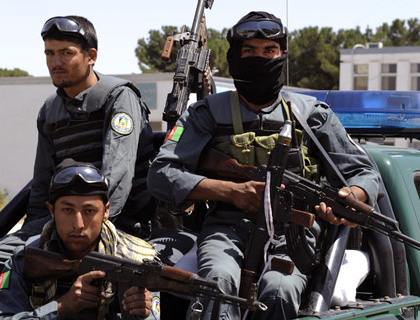
In early days of 2014, the militant groups have launched a series of terrorist attacks across the country, indicating a sudden rise in the Taliban’s campaign of violence. In recent days, the militants have organized a number of suicide attacks and bombing in Kabul and some other key cities. And as a sign of how far have gone the militant groups in using every possible tactics in their campaign of violence, the officials announced that the security forces arrested a 10-year girl in southern Afghanistan who wanted to target police forces patrolling in the area. The security situation is not seeing any progress as the country is inching towards a crucial election. The forthcoming election that in a way or another would considerably be affected by security situation is expected to shape Afghanistan’s post-2014 political destiny.
In the eve of withdrawal of NATO forces, any significant rise in terrorist attacks and security deterioration would not be a good sign for a smooth presidential election and a successful security transition from foreign forces to the Afghan police and army. Though the Taliban activities are expected to decline in the winter season, the recent attacks is suggesting that the insurgents are going to intensify their activities ahead of the election. This year is going to be a crucial year for Afghanistan as the country is set for another milestone event in its recent decade of war against insurgency: completion of security transition to Afghans. Both the political and security processes are coming at a time when Afghanistan is in a shaky alliance with international allies which could, in turn, affect all three major political, security and economic transitions.
The spike of terrorist attacks in the start of 2014 is coming as there are already widespread concerns about security situation ahead of the presidential elections. The electoral bodies have voiced concerns about security of the election process, and asked the security agencies to prepare a comprehensive security assessment of the polling stations and submit it to the Independent Election Commission so that the IEC could arrange the electoral preparations considering the security situation across the country. The election bodies have warned that if the security agencies fail to maintain security of the polling stations, many polling stations might remain closed that could considerably affect elections credibility.
Unlike the previous years, a significant increase in violence and deterioration of security will mean differently for Afghanistan in 2014. In the past, Afghanistan’s security forces fought the insurgency by direct engagement of those forces in the war against the Taliban or with direct support of the US-led foreign forces. This year, any potential and serious security deterioration could mean disastrous for Afghanistan as it could affect negatively, if not derail, the election process which will be critical for all other processes. A deterioration of security across the country could result to closing of polling stations in many parts of the insecure areas of the South and East of the country.
The consequent low turnout of voters in these areas in the election could bring about an electoral crisis of political nature. In other words, if the election turnout is low in significant parts of the country, it may, in itself or as an additional factor, contribute to the possible controversies over irregularities and frauds that might mar the election outcome. Afghanistan’s past experience of 2009 elections has proved that any sway from the right path in the election process could derail the whole process. Unlike the previous election, Afghans need to efficiently handle the election process and let it not derailed by factors such as bad security and frauds; otherwise, the prospect for a political crisis is real and genuine given that now the mediation role of the international community is much different and weaker than the previous elections.
Hence, any possible security deterioration might prove much more disastrous than what is predicted now by Afghan officials and a large portion of the Afghan population. The relatively high level of optimisms for the outcome of the elections – it should be noted that polls show a high level of optimisms among the people towards the elections – is a positive sign for the election process and the perception of the practice given that the perception would play a crucial role in the overall credibility of the process. However, the optimisms and justifications of the Afghan officials that everything is moving in the right direction do not necessarily mean that the election will go right. Regardless of the somehow mixed perception of the situation ahead of the presidential election, there are potentially spoiler factors that could unexpectedly affect the process.
These factors and the overall situation of the country must be taken seriously by the government and recognized by all stakeholders of the process. Any failure, no matter political, security or of other nature, in the process might result to consequent developments that unfavorably affect the outcome of the elections. As the electoral officials expressed concerns about a possible security failure in the election process, the spate of violence in the beginning of 2014 is not a good sign for the handling of the situation by the security agencies. Given that there is no decline of violence in sight, the Afghan government needs to step up efforts and take comprehensive security measures to ensure that the election will go ahead smoothly.