
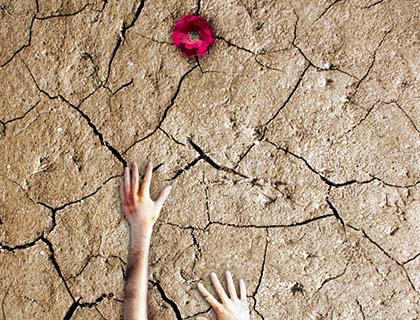
Domestic violence from the eyes of children
Despite a democratic government has been in place and the efforts of international community since 2001, the culture of domestic violence still continues and its incidence is increasing day by day in Afghanistan. Partly lack of peace, education and economic and political uncertainty and suppression of women rights could be the leading factors in increasing its incidence. According to leading news network Tolo News (17-AUG-2013) 2,500 cases of domestic violence against women have been reported to Afghanistan Independent Human Rights Commission (AIHRC) in2013, which is relatively higher than previous years (Tolo News,17-AUG-2013). Moreover each day 22 cases are being reported to AIHRC, which is alarming (Tolo News,17-AUG-2013).
In Afghanistan not only women are the target of violence but it’s also taking its toll on the children who witness them. In another words children of a sub-family who might be living in another room have to witness violence if it takes place with another part of the family, as most Afghans live in joint families. A group of 10 boys, aged between 15 and 20, whom I visited in a hospital had witnessed violence in their families. Most of them witnessed violence on their mothers while others on their sister-in-laws or their other close female relatives were being beaten up in their extended families by a male, mainly patriarch.
Theirflashbacks from their past bring them pain and self-pity, for most of them were always silent or was silenced over what they witnessed in theirclose relatives. Because they were too young and they were taught thatthey don’t have the right to speak up regarding family matters;as a resultthey were accustomed to itand learned to block out these miserable realities. One of them who grew up now said:
“I live with a shameful past because I failed to save my victimized mother from violence. All I could do was to observe, scream and weep. Everything passed in silence…”
This is the ground reality with most of the afghan children who witness domestic violence. They go through it in silence and can’t act. On the other hand the perpetrators feel honored with what they do and unaware of its psychosocial consequences on their children.
The mental images of violence from the boys’ past were psychologically painful. One of them said
“I had to pay the price for it for no reason. Because of the disturbance and noise caused by violence, I couldn’t concentrate.. I had to leave the house in order to study”
'The above examples clearly show the inevitable negative impact of violence on children.
They were also worried about the violent situation in their environment. It significantly influences their mental health and over all development and grooming, especially personality development. It also make it likely that they will learn violenceas a tool to resolves issues.
Lack of education, incompatibility of partners, poverty, and traditional patriarchal culture, and religious traditions contrary to true Islamic beliefs,such as treatment of women as a commodity, make women more vulnerable. The issue is not only inherent in Afghan culture but it is also greatly influenced by religion. Principally Islam promotes equal rights and better treatment of women; however its teachings are partly misinterpreted that becomes disastrous for women. This can be resolved through educating people about women rights in the light of Islamic teaching. In the present scenario along with the state, The National Ulema Council has an enormous role. No doubt, the feat may take many generations.
The domestic violence is turning in to a significant social, human right and public health concern. The reforms in national laws such as development of Afghanistan’s Constitution in 2004 and endorsement of the Law on Elimination of Violence against Women (EVAW) in
2009 are worth achievement (Violence against women in Afghanistan, 2012). These laws criminalized violence and protected women rights. However, these reforms seem very formal and could be easily reversed because they appear conflicting with some traditional yet famous beliefs (Violence against women in Afghanistan, 2012). Earlier the statement of The National Ulema Council that women are secondary to men and that violence against women is acceptable by Sharia to some extent, is one of the obvious examples (Violence against women in Afghanistan, 2012). There is a dire need to continue, and bring in more serious national and international efforts in the post-2014 period when international community are planning to withdraw their interventions and aids. At grass root level it’s important to educate women about the issue. If the issue will not be given much attention that it demands, the culture of violence will continue with bad implications especially for children who witness them.
Reference:
Violence Against Women In Afghanistan (2012). Violence against women in Afghanistan.
http://www.refworld.org/pdfid/529744454.pdf